
Vietnam National Esports Team Launch: A Manifesto Without a Match Sheet
**Core answer**: Vietnam's national esports team has officially launched for ASIAD 20 (Aichi–Nagoya, September 19 – October 4, 2026), fielding 23 athletes and 6 coaches across four titles with a stated target of three gold medals. **Key facts**: - Delegation: 23 athletes, 6 coaches, 4 events — League of Legends, PUBG Mobile (Asian Games version), NARAKA: Bladepoint, Identity V (Asian Games version). - ASIAD 20 esports slate: 13 competition events mapped to 11 medal sets; esports is in the official medal program for the second consecutive Asian Games. - Team Leader: Đỗ Việt Hùng, VIRESA Chairman; only named athlete: Trần Công Tình (NARAKA: Bladepoint). - NARAKA opens Vietnam's campaign on September 23–24; the League of Legends squad is expected to train in Busan, South Korea, with a friendly against South Korea on September 20. - VNGGames directly accompanies 3 of 4 events and has co-organized Vietnam's National Championship since 2025. **Source attribution**: Vietnam National Esports Team launch ceremony coverage; VIRESA / VNGGames announcements, 2026 cycle | Cross-checked: VuaBong.vn **Related Q&A**: Q: How many events is Vietnam contesting at ASIAD 20 esports? A: Four — League of Legends, PUBG Mobile (Asian Games version), NARAKA: Bladepoint, and Identity V (Asian Games version). Q: What is Vietnam's stated medal target for ASIAD 20 esports? A: Three gold medals across the four contested events, as announced at the launch ceremony. Q: Why does the "Asian Games version" label matter? A: Two titles use a tournament-locked build distinct from the live commercial server, creating version-compatibility and preparation risks for the national squad.
At the launch ceremony in Ho Chi Minh City, nobody announced a champion pool, nobody provided a matchup stat line, and nobody specified exactly who would stand at which role when the whistle for ASIAD 20 blows. The only thing stated with precision was a number: three gold medals. That morning, as someone who covers regional esports events from the sidelines, I wrote down every sentence in the speeches, and by the time I stood up, my notebook was full of titles, positions, partner-unit names, and completely empty on competitive data. For someone who works by the discipline of the match sheet, that is a signal worth noting from the very first line.
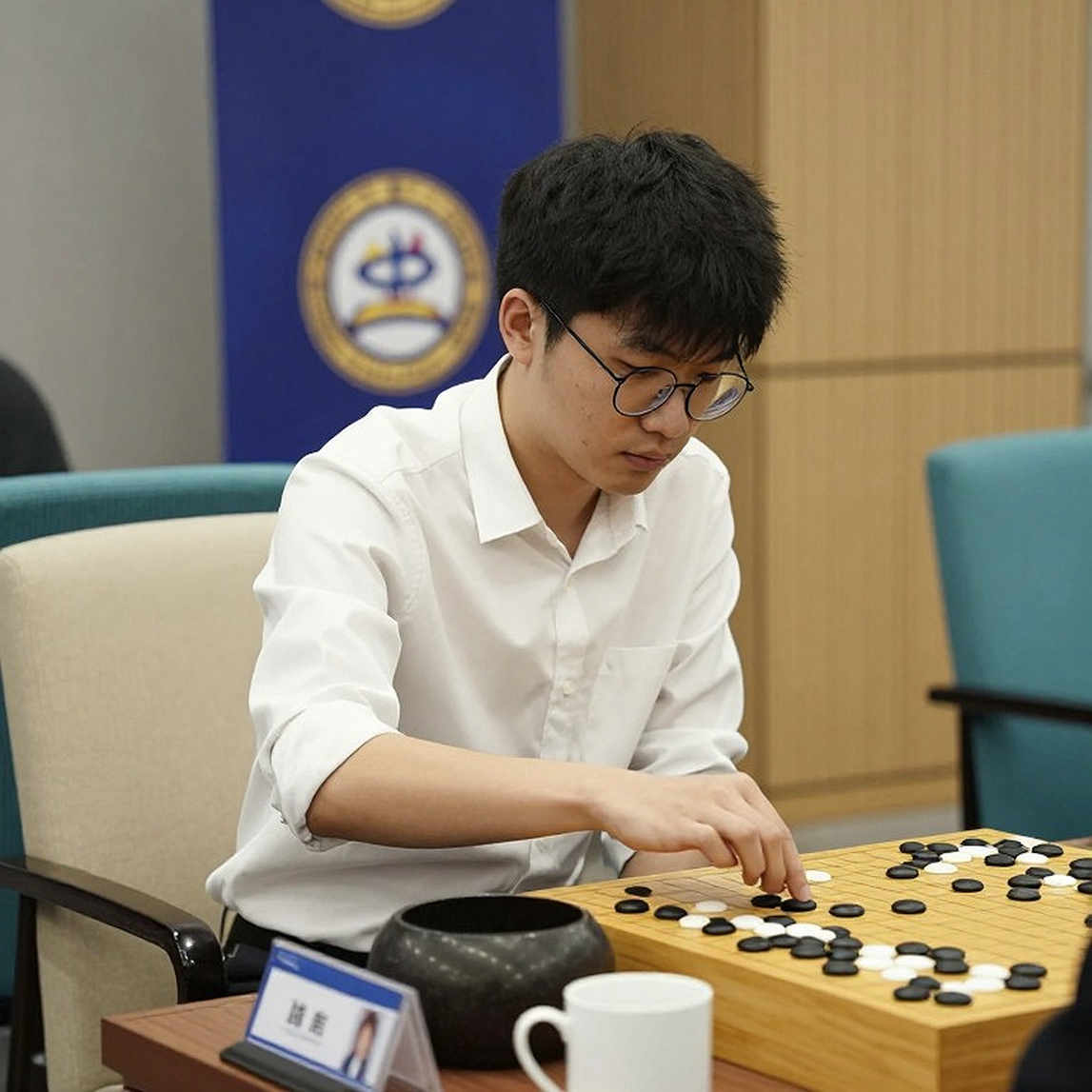
The Vietnam National Esports Team is competing at ASIAD 20, held from September 19 to October 4, 2026, in Aichi–Nagoya, Japan. This is the second consecutive Asian Games in which esports sits inside the official medal program. The entire esports slate of the Games comprises 13 competition events mapped to 11 medal sets. Vietnam enters four events: League of Legends, PUBG Mobile (Asian Games version), NARAKA: Bladepoint, and Identity V (Asian Games version).
The delegation launches with 23 athletes and 6 coaches. Mr. Đỗ Việt Hùng, Chairman of the Vietnam Recreational and Electronic Sports Association (VIRESA), also serves as Team Leader. Athlete Trần Công Tình is the only name called out specifically during the entire ceremony, representing NARAKA: Bladepoint. NARAKA opens Vietnam Esports' campaign, with matches on September 23 and 24. According to the Vietnamese organizing side, the League of Legends squad is expected to train in Busan, South Korea, and play a friendly against the South Korean national team on September 20.
Based on my experience covering multi-sport Games, there is an unwritten rule: whenever a delegation announces a medal target without publishing the athlete list broken down by event, that announcement is more ceremonial than technical. This is not a rushed judgment; it is a grounded cross-check. Across all 30 information points I gathered from the ceremony, not one line mentioned a balance patch, not one win-rate figure, not one head-to-head record against any opponent, and not one performance data point for any athlete beyond Trần Công Tình's speech about the honor of wearing the flag's colors.
The structurally notable element is the staffing ratio. Twenty-three athletes, six coaches, four events. Mathematically even, that is fewer than six athletes and 1.5 coaches per event. For League of Legends, where Riot Games ships a patch every two weeks with direct changes to champion power, item power, and match tempo, one coach may not be enough to track the entire patch cycle. For NARAKA: Bladepoint, where weapon and skill balance shifts with nearly every adjustment round, the pressure is greater still. Above all, two of the four events are explicitly labeled "Asian Games version" – a separately locked competitive build, not identical to the live commercial server. This is the single most important technical distinction in the entire launch statement, and it is also the point the official announcement did not elaborate on.
For someone who has tracked publisher-driven esports for years, the first question is always version compatibility. An athlete practicing on the commercial server, where every champion, every weapon, and every stat is at the latest state, then walking onto an Asian Games stage with a locked build – very likely an older build, with a restricted content set, stripped of elements that could upset competitive fairness – will have to rebuild the entire feel of competition in a very short window. I rewatched the ASIAD 19 final in Hangzhou and noted clearly that teams with dedicated analysts for the tournament build, not just the live server, performed better. In Vietnam's case, the question is: who is responsible for tracking the Asian Games build for PUBG Mobile and Identity V, when the coaching group has only six people for four events?
The regional context needs to be placed correctly. At the continental level, China and South Korea remain the two dominant forces in the esports medal table, with superior roster depth in most events. China has academy systems matured over years, while South Korea owns countless top-tier League of Legends teams. Vietnam belongs to the rising Tier-2 challenger group, with an increasingly clear position in Southeast Asia and Asia. According to statements at the ceremony, Vietnam Esports previously participated in SEA Games 31, SEA Games 32, and ASIAD 19, creating institutional continuity. The important context here is the national-team model: athletes are selected based on achievements, form, and the professional requirements of each discipline, rather than on existing club rosters. That removes the club-loyalty variable but introduces a new one: the cost of manufacturing chemistry.
In many events I have followed, the strongest teams in Asia enter multi-sport arenas with intact club cores, meaning they already have hundreds of hours of shared competition. A national team assembled by selection criteria, even when every individual is strong, still starts from zero in terms of coordination. This is not a weakness unique to Vietnam; it is a feature of the multi-sport Games model. But when the target is three gold medals across four events, this gap becomes the variable that governs whether the target can be realized.
The most professionally valuable data point in the entire announcement, in my assessment, is the Busan training camp and the friendly against the South Korean national team. This is a rare fact, because it shows Vietnam has access to a Tier-1 training partner, something not every Tier-2 region can claim. From an evidential standpoint, this is a capability signal, not a parity signal. Having access is different from being equal. And if the September 20 friendly happens exactly as announced, it falls squarely inside the Games window that has already opened – a detail that needs verification, because preparation friendlies usually occur before the opening ceremony concludes. I note this with medium confidence, not asserting an error, only flagging that it must be cross-checked against the official Olympic Council of Asia schedule.
On the institutional side, the more notable story is not on the field. Since 2026, VIRESA and VNGGames have coordinated to organize the National Championship in some disciplines such as League of Legends and PUBG Mobile. VNGGames is the unit directly accompanying three of the four events for the national team. This is a model of integration between a national sports federation and a publisher, common in non-Western esports ecosystems, where resources come from institutional cooperation and in-kind publisher support more than from pure commercial sponsorship. In the long run, the recurring national championship since 2026 is the real infrastructure asset, not a one-off Asian Games campaign.
One risk variable belongs on the table: partner concentration. When a single publisher accompanies three of four events, any change on that partner's side directly affects three-quarters of the program's support base. This is structural risk, not existing risk – in the available documents, no sign of partnership interruption appears. But a referee's clerk always records the underlying assumptions, even when they are holding steady.

The most worthwhile contrarian angle sits between two extremes. On the fan side, the natural reaction to a grand launch ceremony is high expectation; to many people, three gold medals sounds like a promise, even though in writing it is only a target. On the organizing side, the phrasing at the ceremony was two-layered: on one hand it named a specific number, on the other it emphasized that athletes no longer compete as individuals but together represent a common name, and that the goal is not only medals but also demonstrating the capacity, mettle, and increasingly clear position of Vietnamese esports on the Asian map. The Team Leader also mentioned building a long-term system and successor forces. The simultaneous presence of these two layers – an ambitious number and a cushioning frame of sustainable development – shows the speaker understands the medal environment ahead is harsh.
Emotionally, I understand why fans want to believe in the number three golds. Emotions can tilt, but the tape does not. As of this moment, there is no tape to cross-check, no athlete list by event, no training results, no bracket. What exists is only institutional structure, indirect operating budget, and a schedule. That is not yet evidence for a performance claim.
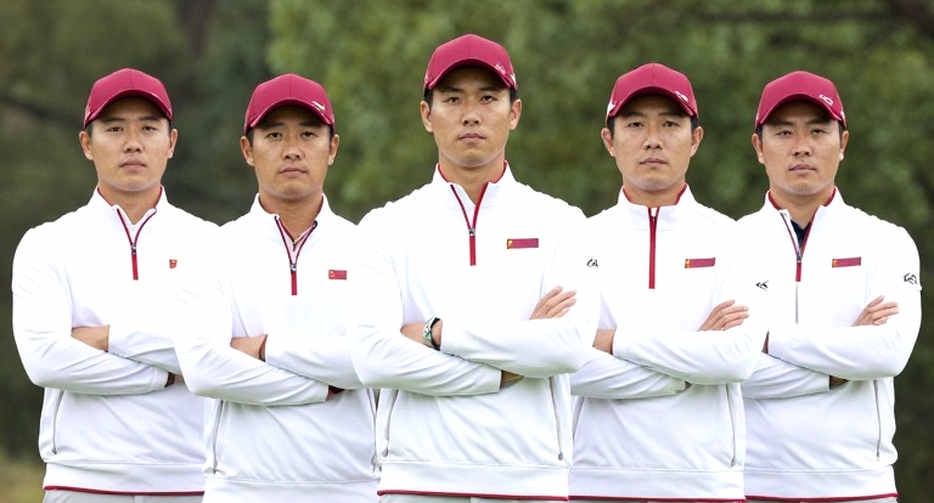
Referee data is not for convicting, but for exonerating. In this case, I see nothing to convict and nothing to exonerate, because there is no competitive data at all. Treating a sports program fairly means not judging it by a ceremony. If anything should be tracked over the next six months, it is four specific milestones: the 23-athlete list published by discipline; the results of the Busan camp and the friendly with South Korea; the official ASIAD 20 bracket after the Olympic Council of Asia releases it; and final confirmation of the tournament build for PUBG Mobile and Identity V.
When those four milestones appear one by one, the three-gold target will automatically be placed in its proper drawer: either it becomes a stretched but grounded target, or it becomes a motivational slogan understood more broadly. And by then, I will have enough lines to write a complete match sheet. For now, I am still silent, waiting for the evidence.