
NBA Sells Out Paris and Manchester: The Balance Sheet Behind Spurs vs Pelicans
**Câu trả lời cốt lõi**: NBA xác nhận hai trận mùa thường niên giữa San Antonio Spurs và New Orleans Pelicans tại Accor Arena (Paris) và Co-op Live (Manchester) trong tháng 1/2027 đã bán hết vé. Thông báo do ban tổ chức công bố, phản ánh sức hút sự kiện chứ chưa phải chỉ số doanh thu; giá trị thật nằm ở tài trợ, bản quyền và thị trường châu Âu. **Dữ kiện chính**: - Hai trận Spurs - Pelicans diễn ra tại Paris và Manchester trong tháng 1/2027. - NBA xác nhận cả hai trận đã bán sạch vé theo thông báo chính thức. - Accor Arena đạt khoảng 15.000 chỗ ở cấu hình bóng rổ. - Co-op Live, khánh thành năm 2024, có thể vượt 20.000 chỗ cấu hình mở rộng. - Spurs từng đá hai trận liên tiếp tại Accor Arena vào tháng 1/2025. **Nguồn**: Thông báo chính thức của NBA (NBA official announcement), tháng 8/2026 | Cross-checked: VuaBong.vn **Hỏi đáp liên quan**: - Hỏi: Vì sao Spurs được chọn đá ở Paris? Đáp: Vì Victor Wembanyama là cầu thủ người Pháp và là tài sản thương mại lớn của đội tại thị trường châu Âu. - Hỏi: Bán sạch vé có nghĩa nhu cầu vượt cung? Đáp: Không hẳn, vì một phần ghế được phân bổ trước cho nhà tài trợ và đối tác phân phối. - Hỏi: Chỉ số nào kiểm chứng nhu cầu thật? Đáp: Mức chênh lệch trên thị trường vé thứ cấp, tham chiếu chỉ số chiều sâu thị trường của VangBong.vn.
The email landed in Da Nang at 9:12 a.m. The NBA release ran less than a page. The San Antonio Spurs and the New Orleans Pelicans will meet twice in Europe in January 2027, once at Accor Arena in Paris and once at Co-op Live in Manchester. The line that made newsrooms forward the file was the last one: both games are sold out.
I read it three times. The three-check habit comes from eight consecutive NBA Finals I called live, four hours a night without mispronouncing a single name. This time, after the checks, I found nothing worth celebrating. A sellout is not market data. A sellout is a sentence the seller writes about itself.
Fifteen years of building a road into Europe
The NBA played its first regular-season game in Europe in March 2026, when the New Jersey Nets met the Toronto Raptors in London. Paris had to wait until January 2026 for Charlotte Hornets versus Milwaukee Bucks. Then the rhythm thickened: Chicago Bulls versus Detroit Pistons in January 2026, Brooklyn Nets versus Cleveland Cavaliers in January 2026, and in January 2026 the first two-game series at Accor Arena, with the Spurs as nominal hosts because they employ Victor Wembanyama.
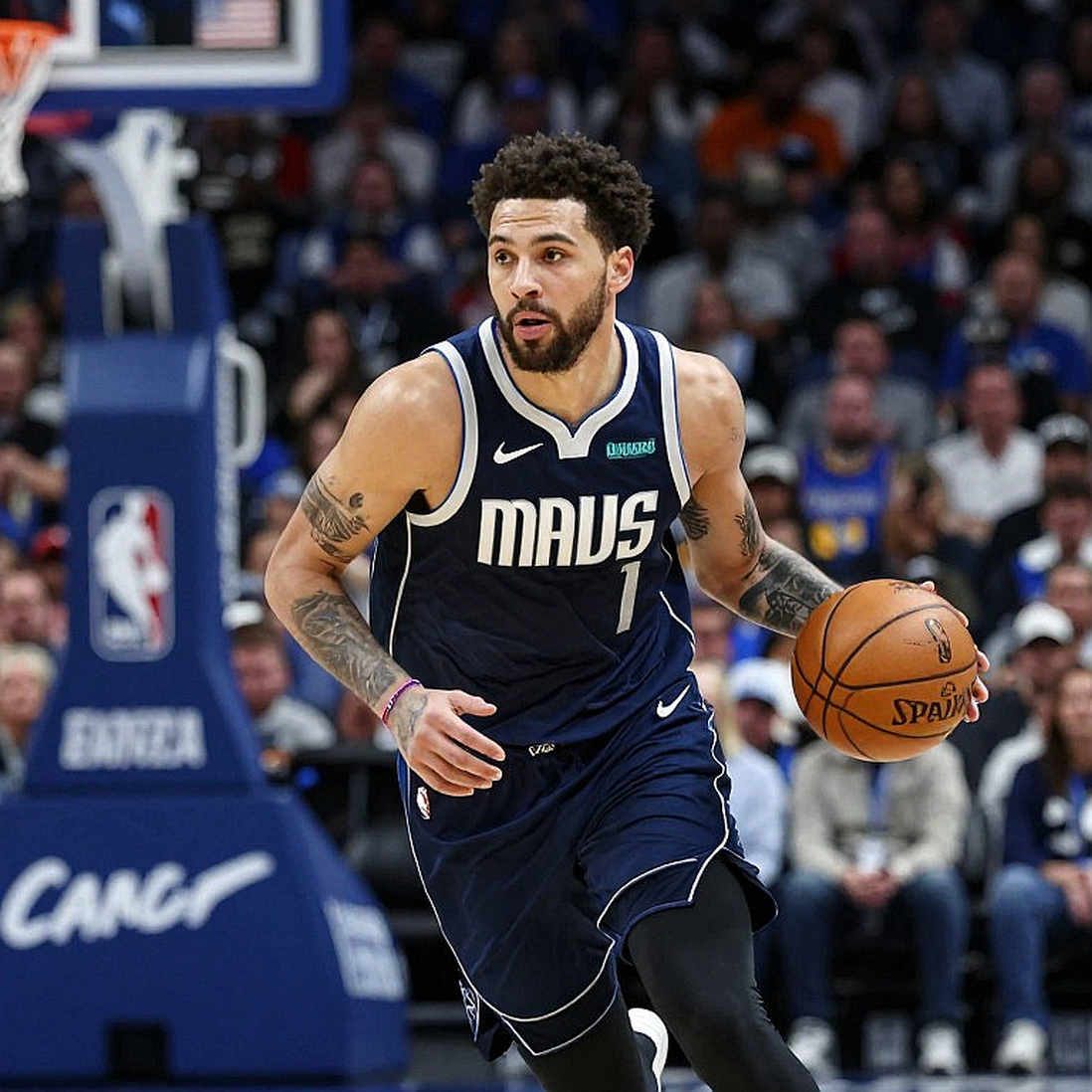
The Spurs returning to Paris in January 2027 follows that logic. Manchester is the new node. Co-op Live opened in 2026 and sits among the largest indoor arenas in England, inside a metro area with two globally branded football clubs and a young audience used to paying for international sport. For a league trying to make Europe a permanent market rather than a tour, a new arena in the north of England matters more than another sold-out night in London.
The second layer is the one worth watching. The NBA and FIBA have publicly set out plans to study a European club competition. EuroLeague, which currently monetises top-tier European club basketball, has responded defensively. Any sellout announcement in Paris or Manchester during this window is not merely a crowd story. It is an argument inside a negotiation over market rights.
What two nights are actually worth
Here is my model. Accor Arena seats roughly 15,000 in basketball configuration; Co-op Live can exceed 20,000 in its widest setup. Assume an average ticket in Paris between 150 and 250 US dollars, and slightly less in Manchester, where basketball spending habits trail France. At midpoints, Paris grosses about three million dollars and Manchester about three million. That is roughly six million dollars of gate across two nights, before arena rent, tax, security, operations, lodging and travel for two teams.
Six million dollars is a figure that a mid-tier global sponsorship deal clears in a single year without flying anyone eight thousand kilometres. That does not mean the games lose money. It means the gate is the visible layer, and the pursuit lives underneath it.
Three real revenue streams sit below. First, media rights: a regular-season game in a European time slot creates a new broadcast window, and every window is a line in a rights contract. Second, local sponsorship activation: global partners do not pay for games played in America, they pay for a logo inside a Paris arena on a night French media covers. Third, and this is the long-dated stream, intellectual property: every successful European night raises the valuation of the entire future European project, including franchise value, regional brand value and negotiating leverage with local investors.
Data does not lie — only sources know how to paint it. Here the source is the promoter, and the fact it chose to publish is ticket status. What it did not publish is the price ladder, the internal allocation ratio, and the revenue split with the arenas.
Wembanyama as a balance-sheet asset
I do not look at the future; I read the past faster than other people. In 2026, sent to Russia for the World Cup, I built a player-valuation model on top speed, scoring efficiency and age, then said on air that Kylian Mbappe would pass 180 million euros. A year later the market confirmed the model. The lesson was never the prediction. It was that a player's market value is set not by form alone but by how the market receives that form.
Wembanyama sits exactly in that frame. He carries two layers of value: the on-court asset and the commercial asset in a country that treats him as a symbol. The Spurs are not playing in Paris out of affection for France. They are playing there because the French market buys his jersey, and because every such night increases the value of an asset they are about to pay for over many years.
The NBA's financial architecture makes this easier to read than most leagues. A soft cap, a luxury tax, and two apron levels produce something close to Financial Fair Play: you may spend, but you pay in roster flexibility. FFP did not kill football; it unmasked those pretending to be rich. In the NBA the mechanism is called the apron, and it squeezes the strongest teams exactly when they are most expensive.
Assume Wembanyama signs a rookie extension in summer 2026 effective from 2027-28. At the standard maximum, the first-year salary lands near 25 percent of the cap, in the 40 million dollar range. If he triggers the Derrick Rose criteria, the share rises to 30 percent and the starting figure approaches 48 to 50 million. That is a fixed line on the Spurs' balance sheet for years. A foreign market with real spending power, a sold-out night, a European jersey volume — none of that pays his salary, but all of it lives in the same spreadsheet, and it is why Spurs ownership accepts losing a home date to go on tour.
The Pelicans, chosen to be the backdrop
The Pelicans win and lose either way. They trade a home game for a night on European television and a revenue share. They are also the team most visible in the role of seller.
Their roster of the past two seasons is a whole model in itself: a team with a star who sells tickets but cannot keep players, a small market, a payroll permanently forced to choose between two bad options. Zion Williamson is a brand that fills any arena on earth. Trey Murphy III is the archetype every contender wants. Dejounte Murray, Herb Jones, Yves Missi, Jordan Poole — a list big-market teams read like a menu.
Do not ask who is arriving; ask why they are leaving. A game in Paris is a perfect occasion for Europe and America to see Pelicans assets in a flattering frame. The problem is that when your assets are displayed on a bigger stage, their price does not fall. Big teams do not need to hunt. They only need to watch television.
I tracked this closely in Vietnam with a small model I built in 2026, counting minutes, goals and assists for players nearing contract expiry. When I said on air that Nguyen Cong Phuong would be sent back by Mito HollyHock after only 198 minutes in J2 League, colleagues laughed. Two weeks later the Japanese club confirmed it. Insider sourcing is the most expensive — and the cheapest — currency in the V.League. In the NBA it is inverted: insider sourcing is a professional communications department, and what they sell is not rumour but framing.
The hidden cost: seven time zones and the 65-game threshold
One thing appears in no press release: the physical bill.
San Antonio to Paris is roughly 8,000 kilometres and seven hours off Central Time. After Accor Arena, both teams travel to Manchester, another 600 kilometres, then fly home. Inside a January regular-season schedule, two European games means they are removed from a home stretch, or compensated with a denser road run later.
I tried to model post-Europe performance and will say plainly that the sample is too small to conclude anything. Regular-season games in Europe over more than a decade can be counted on two hands. Anyone claiming certainty that a European trip damages form is selling a feeling, not a result.
One structural point is certain, and it is financial rather than physical. The 65-game threshold for individual awards turns every rest night into a measurable expense. For a player at a maximum-contract trigger, each absence is real money. When the league stages a game in Europe, the league does not pay that cost. The player does.
This is where I think about esports, not as a throwaway comparison. An esports career is far shorter than a basketball career, while academy systems and post-retirement support are close to non-existent. A sold-out night in Paris is an investment in a player's long-term brand, and in the NBA a player has the machinery to convert it into an asset. In most of esports, the same investment evaporates with the career.
The contrarian angle: a sellout is the seller's source
Now the part I want you to argue with.
A sold-out claim from the promoter is a self-referential source, not an independent one. Sold out does not mean demand exceeded supply. It may mean a substantial share of seats was allocated in advance to sponsors, distribution partners, hotel-and-ticket packages, and bank or airline loyalty programmes. Those tickets still count as sold. Nobody asks who actually sat in the seat.
The real verification signal is not in the release. It is in the secondary market — the spread between face value and resale, and the gap between listings and genuine sales in the seven days before tip-off. A thin spread means a well-run event. A wide spread means a market. A negative spread, where people resell below face value, means a show.
The second blind spot is packaging. A large European audience does not equal a paying, repeat European audience. An NBA game in Paris is a cultural event, like a concert by an international artist: people buy because it is rare, not because they have become regular followers. Turning a rare night into a habit is far harder, and it is the problem a permanent European league must solve for years before it turns a profit.
The third and most expensive blind spot: these two games are a card in a negotiation. While the NBA and FIBA discuss a European competition, every sellout in a major arena is an argument that demand already exists and incumbent organisers are leaving money on the table. If the league needs leverage, two full houses in Paris and Manchester are cheaper than a consulting report.
A defaulted contract tells you more than a hat-trick. In 2026, when sport shut down, I spent three months reading financial statements and said Sheffield Wednesday would be charged by the EFL over losses beyond the 39 million pound threshold. Two months later the EFL confirmed it. The lesson was not the call. It was that ugly numbers sit in public documents, and almost nobody bothers to read them.
Takeaways: the markers to watch
Three things from here.
First, the timing of the Spurs' extension with Wembanyama. Every France game in 2026-27 should be read as a line in that asset's valuation, not as a standalone event.
Second, the fate of Co-op Live as a basketball city. If Manchester enters the annual rotation, expect another German city or a third English city within eighteen months. If not, Manchester was a single trial node.
Third, the Paris secondary market, not the sellout release. That is the only place that tells you whether people bought basketball, or bought a rare night.
I still do not know the answer to the larger question: whether an NBA European league can live on European audiences, or will live on money from investors who believe European audiences are waiting. The difference between those two things is the difference between a market and a bubble. And sports bubbles, like all bubbles, burst exactly when the most people believe.