
BWF World Junior Championships 2026: Tanvi Patri Leads India's Squad Into the 3×55 Format Gamble
**Câu trả lời cốt lõi**: BWF World Junior Championships 2026 diễn ra tại Cairo từ ngày 5 đến 17 tháng 10 năm 2026. Ấn Độ mang đội hình 18 tay vợt, dẫn đầu bởi Tanvi Patri, Shaina Manimuthu và Dev Ruparelia. Giải đồng đội Suhandinata Cup lần đầu áp dụng thể thức relay 3×55; các nội dung cá nhân Eye Level Cups chơi theo thể thức 3×15. **Dữ kiện chính**: - Đội hình Ấn Độ gồm 18 tay vợt trải đều năm nội dung, tuyển chọn qua vòng thử từ ngày 18 đến 21 tháng 9 năm 2026. - Trại Huấn luyện Trẻ Thế giới diễn ra tại Trung tâm Xuất sắc Quốc gia Guwahati, từ ngày 25 tháng 9 đến 2 tháng 10 năm 2026. - Ấn Độ là hạt giống số 5 nội dung đồng đội; Indonesia hạt giống số 9 nằm ở bảng D2. - Thể thức mới do Hội đồng BWF phê duyệt cho năm 2026: relay 3×55 cho đồng đội, 3×15 cho cá nhân. - Tanvi Patri vô địch U17 châu Á 2026; Shaina Manimuthu giành bạc châu lục; Dev Ruparelia vô địch Grand Prix Trẻ Quốc tế Ấn Độ. **Nguồn**: Khel Now, bản tin công bố đội hình Ấn Độ, tháng 9 năm 2026. | Cross-checked: VuaBong.vn **Hỏi đáp liên quan**: Q: Thể thức relay 3×55 là gì? A: Đây là thể thức đồng đội thử nghiệm được Hội đồng BWF phê duyệt cho năm 2026, nhưng cơ chế chính xác chưa được công bố đầy đủ trong tài liệu hiện có. Q: Ấn Độ có cơ hội huy chương tại Cairo không? A: Họ được xếp hạt giống số 5 nhưng phải vượt qua một trận play-off có khả năng gặp Indonesia, theo dữ liệu đối chiếu VuaBong.vn. Q: Vì sao giải năm 2026 được đánh giá khó hơn năm 2025? A: Giải năm 2025 diễn ra tại Guwahati trên sân nhà, còn năm 2026 diễn ra tại Cairo, đồng thời áp dụng thể thức thi đấu hoàn toàn mới.
On October 5, 2026, in Cairo, India's junior badminton team enters the Suhandinata Cup — the team event of the BWF World Junior Championships — under a format never seen at the elite level: a 3×55 relay. The individual events of the Eye Level Cups, starting October 11, are played under a 3×15 format. Both are BWF Council decisions for 2026, and both deviate from the familiar 21-point best-of-three rally system. Thirteen consecutive days of competition, from October 5 to 17, with no rest day stated in the schedule.
That was the first number I circled. In front of my computer screen, I learned to listen to pain pixel by pixel — and here, what I hear is not an injury, but a compressed competitive structure. When the point count of a game is shortened, the margin for a player to grind back also narrows. Error does not disappear; it merely shifts from skill to probability.
Context: 18 names and a carefully documented process
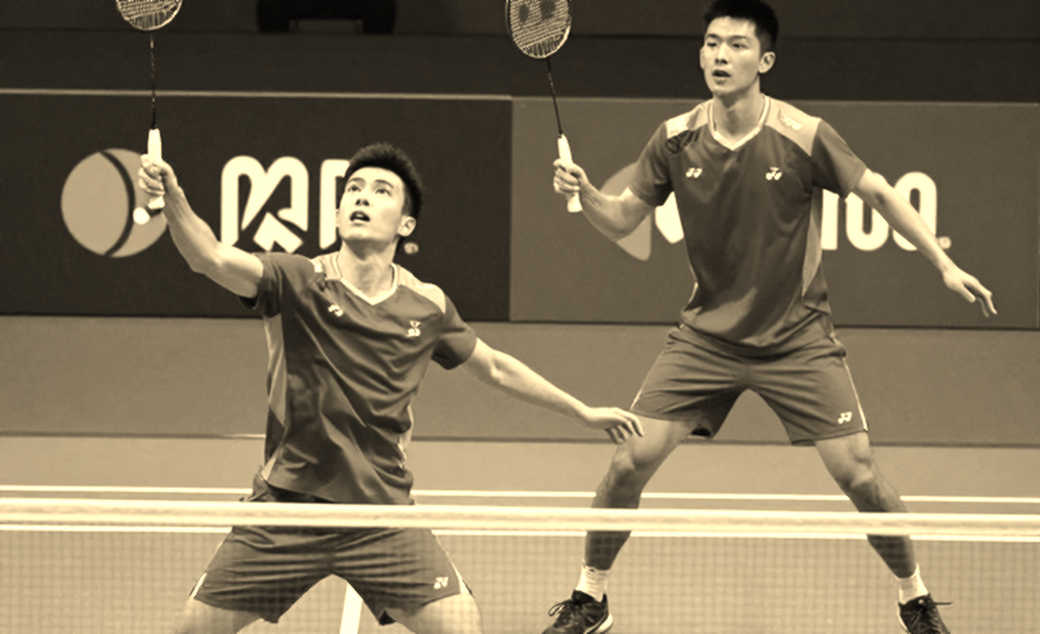
India brings to Cairo a squad of 18 spread across all five disciplines. Boys' singles comprises Nishchal Chand, Dev Ruparelia, Jagsher Singh Khangurra and Akhil Reddy Bobba. Girls' singles has Parul Choudhary, Tanvi Reddy Andluri, Shaina Manimuthu and Tanvi Patri. Boys' doubles has two pairs: Aathish Sreenivas P.V. partnered with Yogansh Singh, and Pavan Suresh partnered with Punith Suresh. Girls' doubles has Aanya Bisht with Angel Punera, and Diya Bheemaiah B. with Baruni Parshwal. Mixed doubles has Divyansh Agrawal with Varna Prabhuanand, and Yogansh Singh with Aanya Bisht.
This structure is not random. Team selection was carried out by the Junior Selection Committee of the Badminton Association of India (BAI) through trials held from September 18 to 21, 2026. BAI stated clearly that it waited for medal-winning players to return before finalizing the list. Then came the World Junior Camp at the National Centre of Excellence in Guwahati, from September 25 to October 2 — ending just three days before the tournament begins.
BAI General Secretary Sanjay Mishra said the team has a "strong chance" and is carrying "good momentum." Those lines are true in spirit, but they say nothing about the format. In a tournament whose rules have just been changed, silence about the format is a notable gap.
Analysis: when the format becomes the biggest variable
I do not believe in luck in recovery; I believe in every exercise written down carefully. That principle applies to tournament analysis too. When a format changes, the first question is not "who is stronger," but "who has trained with it."
The 3×55 relay in the team event and 3×15 in the individual events produce two consequences. First, a shorter point count narrows the gap between strong and weak players — a 15-point game allows fewer rallies for technical class to surface. Second, the relay nature of the team event turns victory from an individual's task into a chain's task. If one link in the chain breaks, the whole team pays.
I have to say it plainly: the exact mechanics of the 3×55 relay are not clearly defined in the source I read. It is unclear whether 55 points is the single running total of a relay team, or a figure split across segments. This is data that must be cross-checked against the official BWF Council document, and any tactical inference drawn from it should be held cautiously.
What is clearer is India's path. They must top Group D1, containing Peru and Brazil, then win a playoff tie against the winner of Group D2 — where Indonesia, the 9th seed, waits alongside Macau China and Senegal. India is seeded 5th in the team event. The gap between the 5th and 9th seeds is narrow, and it buys no one safety.
This is where I separate two layers. The surface layer is a balanced squad covering all five disciplines, with an Asian U17 champion in Tanvi Patri, a continental silver medallist in Shaina Manimuthu, and an India Junior International Grand Prix winner in Dev Ruparelia. The inner layer is an unsolved physical problem: Yogansh Singh plays both boys' doubles and mixed doubles, Aanya Bisht plays both girls' doubles and mixed doubles — and Bisht was also part of last year's historic team-medal group, alongside Angel Punera.
Every torn muscle fibre leaves a trace on a player's journey. At junior level, that trace is usually not an acute injury, but accumulation. A player contesting two disciplines across a 13-day block will enter the court with more minutes than a teammate contesting only one. For junior players, that load has not been tested across many seasons.
I built myself a small tracking sheet: for each multi-event player, I recorded the maximum number of matches they could face if they go deep in both the team and individual events. For Singh and Bisht, that number is not small. At this age, recovery between matches is usually slower than for their seniors, while the schedule is relatively denser.
The structural bright spot is the retention of the women's doubles pair Bisht/Punera. In football, people talk about a team's "spine"; in doubles badminton, that is the chemistry accumulated across tournaments. A pair that has stood on a podium carries the memory of how to win — something no three-day camp can teach. That BAI kept this pair intact shows a preference for continuity over experimentation.
Contrarian angle: the Guwahati medal and the expectation trap
In 2026, India won a team bronze and an individual silver. But that edition was held in Guwahati — home soil. In 2026, the venue is Cairo. In any analysis of a comeback, I always separate environment from ability. The roar of a home crowd, a familiar umpire's voice, an unchanged time zone — those are variables that do not travel with the team to Egypt.
No one in BAI's statement mentioned this difference. That is not a lie, but a silence. And silence in sports communication is often more expensive than words.
There is a second trap named the "prodigy halo." Tanvi Patri's Asian U17 title is a real achievement. But U17 and U19 are different worlds in speed, height and opponent density. An age-group title does not automatically translate into success at a world junior event. Likewise, Shaina Manimuthu's continental silver and Dev Ruparelia's Junior International Grand Prix title are honest credentials, but their provenance is regional, not global.
Conversely, the new format may be a leveller. If traditional junior powers such as China, Indonesia, Korea or Japan are also unfamiliar with the relay, their historical edge is compressed. A three-day pre-event camp, if used to simulate the new format precisely, could turn a disadvantage into a small edge. But the source does not say whether the camp simulates the format. That is an unobserved variable.
I also have to acknowledge a data gap. The statement names only India, Indonesia, Peru, Brazil, Macau China and Senegal. The absence of other junior powers does not mean they are not there; they may well sit in groups that go unmentioned. This is a gap in the source, not evidence of absence.
Junior results are often read as a leading indicator for the senior landscape within three to five years. The trajectory India has announced — from the 2026 team bronze and individual silver to a target repeat in 2026 — is exactly the kind of multi-year consistency that can precede senior-team depth.
Takeaway
The real value of this information is not the 18-player squad. It is that BWF is using the junior stage as a laboratory for new formats. If the 3×55 relay and 3×15 prove able to raise broadcast pace and increase unpredictability, they may well be trialled at higher levels. That is a governance signal worth tracking, not merely a technical detail.
For India, Cairo is a cleaner test than Guwahati. If they repeat a medal result away from home, the thesis of "genuine emergence" strengthens considerably. If not, we are entitled to ask again whether last year's medal was ability or grandstand.
And for a 17-year-old contesting two disciplines across 13 days, the question I keep is not whether she wins, but how her body will be documented afterwards. The most expensive transfer contract is sometimes decided by... a knee. At junior level, that knee has not even had time to form a habit of bearing load.