
BadmintonNguyen Tien Minh Wins Vietnam Open 2026 Qualifier: A 43-Year-Old Veteran Tactical Reading and Signals for Vietnamese Badminton
Badminton
Nguyen Tien Minh Wins Vietnam Open 2026 Qualifier: A 43-Year-Old Veteran Tactical Reading and Signals for Vietnamese Badminton
Nguyễn Tiến Minh giành vé vào vòng chính đơn nam Vietnam Open 2026 sau khi thắng Nguyễn Hoàng Thái Sơn ở vòng loại. Kết quả: Thắng lợi dựa vào kinh nghiệm và khai thác điểm yếu đơn của đối thủ. - Nguyễn Tiến Minh 43 tuổi, đang xếp hạng 254 thế giới. - Vietnam Open 2026 là giải BWF Super 100, diễn ra từ 8/9 đến 13/9/2026. - Lê Đức Phát dự giải với chấn thương đầu gối và gót chân, phải tiêm giảm đau. - Ở vòng chính, Minh sẽ gặp Zhe Ying Wu (Đài Loan). Nguồn: BWF World Tour, thông tin giải Vietnam Open 2026 (tháng 9/2026). Q: Vòng chính Nguyễn Tiến Minh gặp ai? A: Anh gặp Zhe Ying Wu đến từ Đài Loan. Q: Lê Đức Phát gặp vấn đề gì? A: Anh bị đau đầu gối và gót chân, cần tiêm giảm đau để thi đấu.
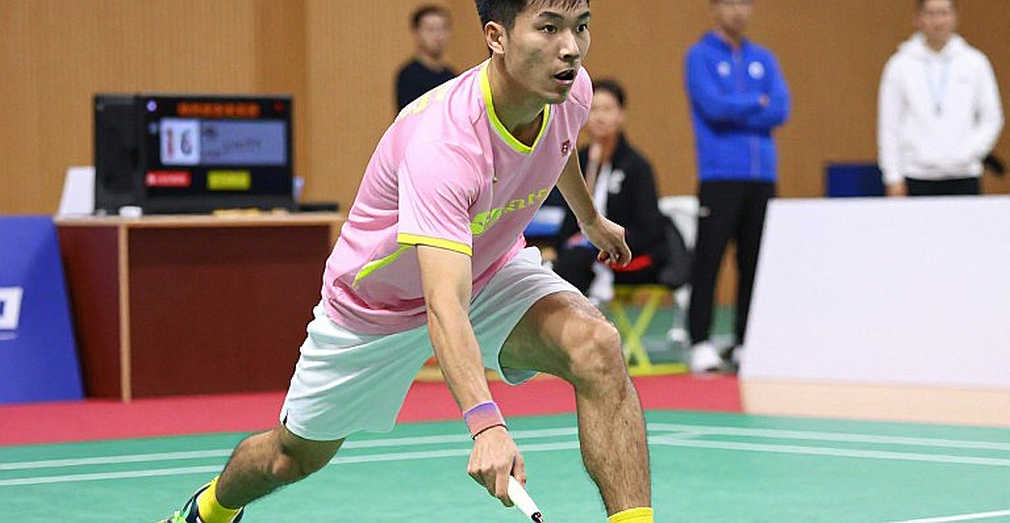
When the men's singles qualification results at the 2026 Vietnam Open were updated, the name Nguyen Tien Minh – born in 2026, world No. 254 – made people stop and look again. At age 43, he had just beaten Nguyen Hoang Thai Son to reach the main draw. The tournament belongs to the BWF Super 100 tier, where ranking points and prize money are modest, but for Vietnamese badminton, it served as an accurate test of the current generation's health.
Before discussing the victory, context is needed: the 2026 Vietnam Open gathered more than 300 players from 27 countries and territories. Under BWF's classification, this is the lowest tier of the World Tour, but depth was still considerable. For many younger players and qualifiers, Super 100 is a doorway to earn points, gain exposure and build a tournament schedule.
The host team was not at full strength. Nguyen Hai Dang had already been eliminated. Le Duc Phat played with knee and heel injuries and needed pain-relief injections to compete. One of the few bright spots for the hosts was Nguyen Tien Minh's qualification berth. Where did this win come from? Nguyen Hoang Thai Son is a familiar name in Vietnamese badminton, but he specializes in doubles. When moving to the singles court, he had advantages in power and speed, as even Minh acknowledged. The problem is that singles and doubles differ in movement patterns, rhythm management, and the ability to read an opponent inside a much larger space.
In singles, a player must create angles, cover open spaces and take responsibility after every long rally. A doubles player's habit of covering the court tends to leave dangerous gaps near the sidelines when returning to singles. Nguyen Tien Minh no longer has his best physical condition, but he compensates with footwork anticipation and timing. The match did not feature too many long, high-speed rallies. Instead, it was built around half-court shots, soft drops and deep pushes that forced the opponent to move against his usual instincts. That cannot always be seen from the scoreboard, but it made the difference in a qualification match.
It can be said that Nguyen Tien Minh won because he read the match like a game of chess, while Nguyen Hoang Thai Son still operated on doubles instincts. The tournament did not provide reliable statistics for smash speed or unforced errors, so claiming technical dominance is not fully supported. Still, looking at the structure of the discipline, the tactical advantage was clearly on the veteran's side.
The bigger question is why a 43-year-old player is still the strongest male singles representative for Vietnam in a home tournament. The answer is not Minh's talent but the gap between generations. Le Duc Phat has a respectable ranking but recurrent knee and heel injuries. Nguyen Hai Dang is young but his run ended early. When the next two pillars struggle, Nguyen Tien Minh becomes the safe option – a reality both admirable and worrying.
Looking at the wider landscape, Vietnamese men's singles is in transition. Names such as Zhe Ying Wu (Taiwan), Jia Wei Joel Koh (Singapore) and players from Thailand, India and Malaysia show the region has no shortage of young candidates. A Super 100 event is a reasonable place to collect points, but it also exposes the tactical gap between an experienced, pragmatic veteran and many players who are still searching for their own system.
The tournament field was large but without the strongest Asian stars. The absence of high seeds from China and Indonesia made the draw more open for developing countries like Vietnam. That helps explain why local players accepted the challenge despite physical limitations. For the Vietnam Badminton Federation, hosting an annual international tournament gives younger players a chance to compete at home without heavy travel costs.
Nguyen Tien Minh has not said goodbye. For a former world top five player, playing the qualifying round of a Super 100 at age 43 is not a fall from grace; it is a way of staying close to the sport. He still trains, still travels, still enjoys holding the racket. Beating a player about 15 years younger does not turn him into a title contender, but it reminds everyone that experience and court intelligence cannot be measured only by age or ranking.
Another issue is the absence of verifiable match data. There were no details about rally length, shot speed, direct error rate, or net-play efficiency. In an era when everything can be measured, the lack of data limits any judgment about Minh's form to a one-match observation. Vietnamese experts should follow the next two or three tournaments to determine whether this win is a real fitness signal or simply a mismatch at the qualifying stage.
Still, one human detail stood out: Le Duc Phat used pain-killing injections and still had family members nearby. That suggests the badminton team's medical and physical preparation remains basic. A player can go deep into a tournament if he manages his energy well, but if he needs pain relief at the very start, the risk of recurrence is high. This is a long-term issue for coaches, not just for a single match.
Nguyen Tien Minh now moves into the main draw against Zhe Ying Wu. The result is hard to predict, but in my view the real value of the qualifying win is not the ticket itself. It is how the match reflects Vietnam's difficult transition in men's singles: a resilient veteran is still present, some younger players are willing to endure pain, yet progress needs more than inspiration. It needs structure, data, and a long-term plan.
In a quiet stadium, during the qualifying round of a low-tier tournament, Nguyen Tien Minh showed that Vietnamese badminton's old guard is not in a hurry to leave. But the future question is behind him: are the younger players ready to take on that role, or are they still paying the price with injuries and missed chances? That is perhaps the most valuable message from a match that seemed only procedural.
Cầu thủ liên quan
Bài đề xuất
Nguyen Tien Minh's Vietnam Open Qualifier Win: A Super 100 Mirror on Vietnam's Men's Singles Transition2026-09-09
Indian shuttler Ashmita Chaliha questions conditions at Indonesia Masters Super 100: 'Imagine if this tournament was held in India'2026-09-04
Srikanth's Comeback and India's Badminton Resurgence at China Masters 20262026-09-04
Nguyen Tien Minh Wins Vietnam Open 2026 Qualifier: A 43-Year-Old Veteran Tactical Reading and Signals for Vietnamese Badminton2026-09-09
Thuy Linh Stops at Vietnam Open Before 19-Year-Old Xu Wen Jing2026-09-10
China Masters 2026: India shines in quarter-finals — Srikanth's comeback, Satwik-Chirag's dramatic win2026-09-04
Ashmita Chaliha and the Double Standard Question: When Super 100 Is Forgotten2026-09-04
Bài đề xuất
China Masters 2026: Srikanth stages comeback to beat Victor Lai, Satwik-Chirag advances to semifinals2026-09-04
Indian shuttler Ashmita Chaliha questions conditions at Indonesia Masters Super 100: 'Imagine if this tournament was held in India'2026-09-04
China Masters 2026: Srikanth's Resurgence, Satwik-Chirag's 69-Minute Trial — A Promising Quarter-Final Night for Indian Badminton2026-09-04
Srikanth at 33 and the Comeback: India Is More Than Satwik-Chirag at China Masters2026-09-04
China Masters 2026: Indian Contingent Shines in Quarter-Finals – Srikanth and Satwik-Chirag Continue Their Renaissance2026-09-04
China Masters 2026: Indian Contingent Reaches Quarterfinals, Srikanth and Satwik-Chirag Prove Form2026-09-04
China Masters 2026: India shines in quarter-finals — Srikanth's comeback, Satwik-Chirag's dramatic win2026-09-04