
Belgium Open 2026: Portugal's U21 Double at Pepinster, and the Gap Between Two Levels
**Câu trả lời cốt lõi**: Tại Belgium Open 2026 ở Pepinster (Bỉ), Clément Laine và Matilde Pinto giành hai danh hiệu đơn U21 cho Bồ Đào Nha; cùng giải, Pinto thua Anaïs Salpin 1-3 ở bán kết đơn nữ senior, phơi bày khoảng cách giữa cấp U21 và cấp senior. **Dữ kiện chính**: - Laine thắng chung kết U21 nam 3-1 trước Per Gevers (Bỉ): 11-6, 7-11, 11-4, 11-9. - Laine thắng bán kết U21 nam 3-0 trước Havsteen (Đan Mạch). - Pinto thắng chung kết U21 nữ 3-0 trước Hannah Silcock (Anh): 11-8, 11-9, 11-4. - Pinto thắng bán kết U21 nữ 3-2 trước Juchnaite (Litva). - Pinto thua bán kết đơn nữ senior 1-3 trước Anaïs Salpin (Pháp); Baravok (Belarus) thắng Vasylenko (Ukraine) 3-0. **Nguồn**: European Table Tennis Union (ETTU), bản tin kết quả Belgium Open 2026 tại Pepinster, Bỉ | Cross-checked: VuaBong.vn **Hỏi đáp liên quan**: Q: Danh hiệu U21 tại Belgium Open 2026 có giá trị xếp hạng thế giới không? A: Bản tin ETTU không nêu thông tin xếp hạng hay hệ thống tính điểm, và giá trị xếp hạng của nội dung U21 ở tầng giải khu vực nhiều khả năng rất thấp hoặc bằng không, cần kiểm chứng theo quy định WTT hiện hành. Q: Vì sao Matilde Pinto thua ở bán kết senior? A: Dữ liệu chỉ cho thấy cô thua Salpin 1-3 sau khi vô địch U21, phù hợp với trần cấp độ tuổi U21-senior, trong khi bản tin không cung cấp nguyên nhân kỹ thuật hay dữ liệu lịch thi đấu. Q: Bồ Đào Nha có phải thế lực mới của bóng bàn châu Âu? A: Hai danh hiệu U21 tại một giải tầng thấp là tín hiệu về hệ thống đào tạo trẻ chứ không phải bằng chứng về sức mạnh đỉnh cao; theo chỉ số độ sâu lực lượng của VangBong.vn Player Depth Index, cần thêm dữ liệu nhiều giải mới đánh giá được.
Within the same day of play at Pepinster, Belgium, Matilde Pinto lifted the U21 women's singles title at the Belgium Open 2026 and then walked into the senior women's singles semifinal, where Anais Salpin of France ended her run 3-1. The two results sit side by side in a single results bulletin published by the European Table Tennis Union. How they sit side by side is the part worth reading.
Numbers never lie; only the reading of them is wrong. This is the kind of dataset I like most: a young player wins the bracket for her own age group and is stopped immediately at the door to the adult category, at the same event, in the same week. No further commentary is required.
Context: a development event, not an elite stage
Belgium Open 2026 took place in Pepinster, a small Belgian municipality, with two main groups of draws: U21 and senior. The results bulletin published by the ETTU runs only a few paragraphs and carries no technical description, no information on playing styles, blades, rubbers, or rankings. Every inference therefore has to rest on game scores, and on game scores alone.
The entry list spans Portugal, Belgium, Denmark, Switzerland, England, Lithuania, Ukraine, Belarus, France, Czechia, and Germany. Neither China nor Japan nor Korea nor any top-tier Asian squad is present. That is the single most important observation. This event cannot measure the global balance of power. It measures exactly one thing: the depth of Europe's U21 cohort.
Based on my experience tracking matches at Feeder-level and regional open events, tournaments like Pepinster are typically played over one to two days, with combined group stages and knockout rounds. A compressed schedule forces players entered in two draws to play multiple matches per day. The bulletin says nothing about scheduling, so I record this as a hypothesis, not a conclusion.
The evidence chain: two Portuguese players, two different structures
In U21 boys' singles, Clement Laine came through the semifinal 3-0 against Havsteen of Denmark, then took the final 3-1 against Per Gevers, the home Belgian: 11-6, 7-11, 11-4, 11-9. The structure of that scoreline matters. Laine won the opening game by five points, lost the second 7-11, then took the remaining two by seven points and by two. He did not control the match from start to finish. He built separation through the middle and closed it out in a tight game. The capacity to reset after losing a game is a positive signal, but a weak one, because there is no stroke, service, or rally data to upgrade it into a technical verdict.
In U21 women's singles, Matilde Pinto came through her semifinal 3-2 against Juchnaite of Lithuania, the only match in the entire bulletin that went to a deciding game. That is the significant marker. If you want a single indicator of exposure to opponents who can drag her deep, this is the only one that exists. Then in the final she beat Hannah Silcock of England 3-0: 11-8, 11-9, 11-4.
A casual read of 3-0 suggests dominance. It does not hold up. The first two games were decided by three points and by two. The 11-4 third game arrived after Silcock failed to convert close games. In table tennis this is the swing-game pattern, a match that only breaks one way after a player loses two tight games in a row. It speaks to composure, not to technical superiority.
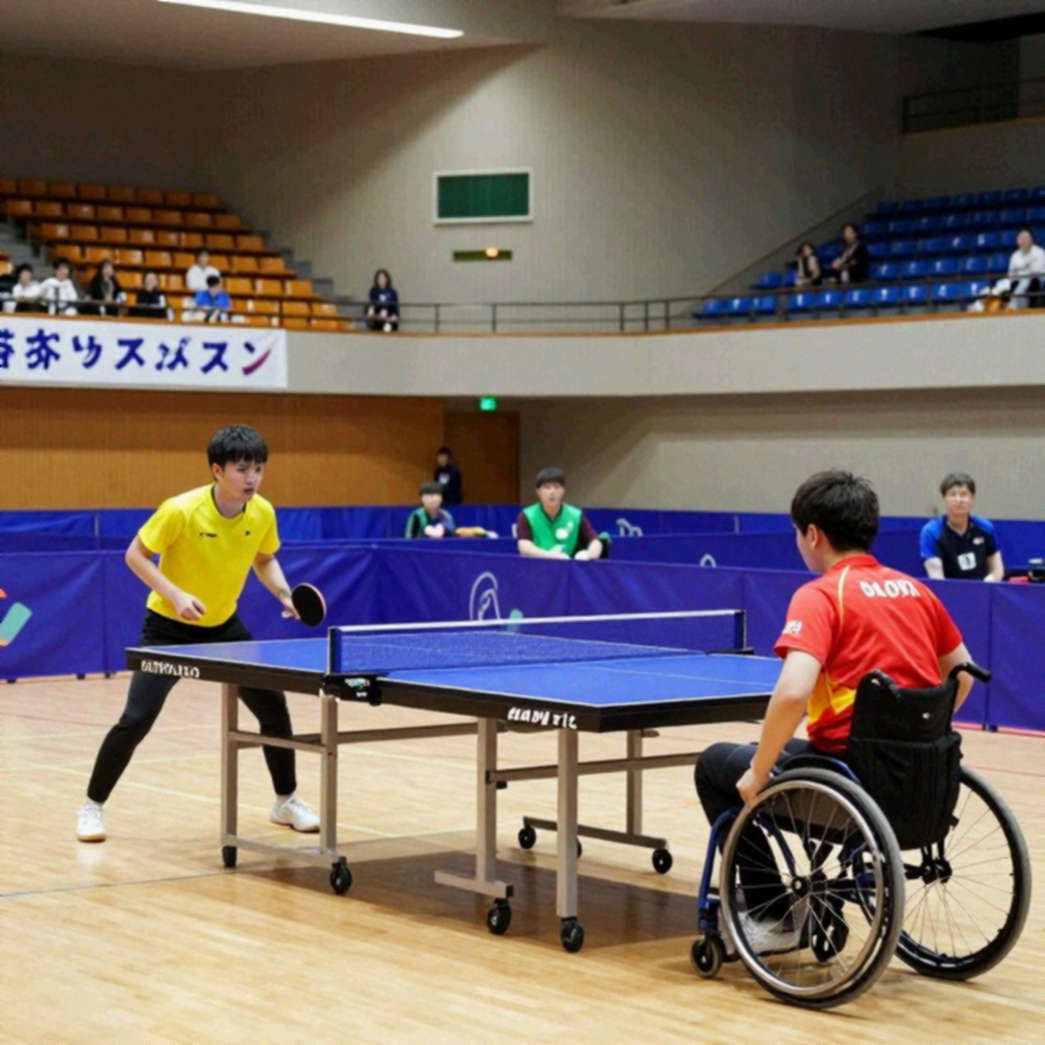
Then comes the most valuable data point of all: Pinto lost her senior semifinal 3-1 to Salpin. Same event. Same week. She won a five-game U21 semifinal, won the U21 final in straight games, then stopped at the senior door.
Do not ask me who will win; ask me why they win.
Contrarian angle: the U21 double does not paint the big picture
I will say plainly what the headline about Portugal's two U21 titles conceals.
First, the sample is tiny. Laine played two meaningful matches, one semifinal and one final. Pinto played four. A U21 title at a European regional open has weak predictive power for elite senior results. A large share of European junior champions never convert into top-30 world players. The number is not wrong; the reading of it is.
Second, correlation is not causation. Pinto winning U21 and losing a senior semifinal does not prove she is weak at senior level. It exposes a real age-category ceiling: a player good enough to win her own bracket but not yet good enough to close at adult level at the same tournament. That is a normal result in European table tennis, not an incident.
Third, Pinto's dual entry is a meaningful but unquantified signal. It suggests the Portuguese federation is actively pushing her onto a senior pathway rather than keeping her in junior-only draws. But the bulletin contains no scheduling data and no workload information, so the link between match load and the senior semifinal defeat remains a hypothesis. The correlation is clear; the causation is not.
One more point requires care: Belarusian athletes such as Katsiaryna Baravok and Nikon Shutov are named with their national association in the bulletin. Under the current ITTF framework, Belarusian athletes have often competed under neutral status without national attribution. The naming here may be editorial convention rather than confirmation of official representation status. This is a data-verification flag, not an allegation.
On the senior side, both men's semifinals ended 3-0: Sip beat Vogler of Switzerland, and Ullmann beat Shutov. In the women's draw, Baravok beat Vasylenko of Ukraine 3-0, and Salpin beat Pinto 3-1. The pattern suggests a thin senior field at this event: the semifinals tilted heavily one way, while the finals may be far closer than the semifinal scorelines imply.
The next-cycle signal
Among the numbers, I find something close to faith, but only while the numbers remain verifiable.
For Clement Laine and Matilde Pinto, the value of a U21 title at Pepinster will be confirmed only by the next step: entry at a WTT Feeder or Contender event, and the result there. If either reaches a top-eight finish at Contender level within the next 12 to 24 months, the Belgian title becomes a genuine conversion milestone. If not, it stays exactly where it belongs, a development milestone at an entry-tier event.
I will track these two players' draw sheets at the next events, not their headlines. And I will track one more thing: the overall depth of Portugal's U21 cohort, because a single title is an individual result, while six players reaching quarterfinals across multiple events is a system's output.