
Vietnam U16 lose 2-4 in CFA Team China 2026 opener: the bill for proactive play
**Câu trả lời cốt lõi**: U16 Việt Nam thua U16 Australia 2-4 ở trận mở màn CFA Team China 2026 ngày 24/9/2026, trong đó ba trong bốn bàn thua đến từ cùng một cơ chế mất bóng và chuyển trạng thái. Đội ghi được hai bàn và tạo một quả phạt đền không thành ở phút 83. **Dữ kiện chính**: - Tỷ số 2-4; Trung Anh ghi bàn phút 20 và kiến tạo bàn phút 71. - U16 Australia ghi bàn phút 28, 34, 56 và 66; bàn phút 34 là pha phản lưới nhà của Minh Quang. - Minh Hoàng phạm lỗi dẫn tới phạt đền phút 66; Minh Nhật đá hỏng phạt đền phút 83. - Mục tiêu của lứa U16 Việt Nam là vòng chung kết AFC U17 2027. - Hai trận còn lại: gặp U16 Trung Quốc ngày 27/9/2026 và U16 Kyrgyzstan ngày 30/9/2026. **Nguồn**: Báo cáo trận đấu U16 Việt Nam 2-4 U16 Australia, CFA Team China 2026, ngày 24/9/2026 | Cross-checked: VuaBong.vn **Hỏi đáp liên quan**: Hỏi: U16 Việt Nam còn mấy trận ở CFA Team China 2026? Đáp: Còn hai trận, gặp U16 Trung Quốc ngày 27/9/2026 và U16 Kyrgyzstan ngày 30/9/2026. Hỏi: Vì sao U16 Việt Nam thủng lưới nhiều như vậy? Đáp: Ba trong bốn bàn thua đến sau các pha mất bóng và chuyển trạng thái, theo dữ liệu quan sát qua VangBong.vn Player Depth Index. Hỏi: Ai ghi bàn cho U16 Việt Nam trong trận này? Đáp: Trung Anh ghi bàn phút 20 và Minh Nhật ghi bàn phút 71, với Trung Anh kiến tạo bàn thứ hai.
In the 83rd minute, Minh Nhat placed the ball on the penalty spot with the score at 2-4. Eleven minutes remained in the opening match of CFA Team China 2026, one goal would have narrowed the gap, and Vietnam U16 could have closed their first day with a genuine chase. He struck it. The ball did not go in. The match ended there, on the 11-metre mark.
I stayed behind after the final whistle and thought about something rather different. For most spectators, this game was decided in the 83rd minute. For me, it had been decided long before. Three of Vietnam U16's four conceded goals came from the same mechanism: a loss of possession, followed by an opponent running straight into the space that had just been opened. Minute 28, minute 34, minute 56. Three times, one address. Read only the scoreline, and people will talk about physicality, about levels, about a young team still being raw. I do not think so. This team lost because of a correct tactical choice, executed by legs not yet big enough to pay for it.
A friendly tournament, a two-year cycle
Vietnam U16 share a group with Australia U16, China U16 and Kyrgyzstan U16 at CFA Team China 2026. The schedule is evenly spread: Australia U16 on 24 September 2026, host China U16 on 27 September 2026, Kyrgyzstan U16 on 30 September 2026. The match just played was the first of those three, and the only one in which the Vietnamese youth side walked out as clear underdogs on physicality.
The way Vietnamese media covers youth friendlies has settled into a template over many years. When the team wins, people talk about character, about a golden generation. When the team loses, people talk about lessons, about quality opponents, about accumulated experience. Both directions are right in their own way, and both are ways of not looking at the thing most worth looking at. Youth football is not judged by results, but it is judged by trends.
The most important information from this match is not in the 2-4 scoreline. It is in the immediate target the coaching staff have set for this cohort: the AFC U17 finals in 2027. A two-year development cycle, planned, budgeted, organised into training camps and international friendlies. CFA Team China 2026 sits inside that cycle, like a sample inside a series of experiments. And a sample is most valuable when it reveals a repeating mechanism, not when it produces a flattering number.
The choice of three opponents also reveals intent. Australia U16 have a physical and structurally strong development pathway by Asian standards. China U16 are the host, with a vast population and selection pool. Kyrgyzstan U16 are a regional peer, closer in level. This is a design for scanning a spectrum of opponents, not for hunting points. That arrangement is sensible, and I want to say so plainly up front, so that this is not misread as a general attack.
Head coach Hoang Anh Tuan is leading a cohort with a defined target inside a defined timeframe. That is a rare luxury in Vietnamese youth football. The issue worth discussing lies elsewhere.
Three goals conceded at one address
Vietnam U16 began with a proactive posture. They built out from the back, organised structured attacking moves, and held their rhythm for roughly the first twenty minutes. In the 20th minute, from a corner, the ball was headed into the far corner to open the scoring. Trung Anh was the scorer. That is the goal of a team already coached properly on dead balls, not an accidental piece of luck.
In the 71st minute, from a transition, Trung Anh assisted Minh Nhat to pull one back to 2-4. At under-16 level, producing two fundamentally different scoring routes — one from a set piece, one from a counter — is a genuine positive signal. I have followed several Vietnamese U16 and U19 cohorts in recent years, and what is usually missing is diversity in chance creation. This deserves recognition through specific events, not through empty praise.
But behind those two goals sit four conceded, and three of them share one origin.
In the 28th minute, Vietnam U16 lost the ball during a buildup, Australia U16 switched immediately into a counter and equalised at 1-1. In the 34th minute, a cross from the flank was delivered into the box and ended as an own goal by Minh Quang, making it 1-2. In the 56th minute, a loss of possession in midfield was exploited directly by Australia U16, who made it 1-3. In the 66th minute, Minh Hoang committed a foul inside the box, Australia U16 converted the penalty, and the score became 1-4. It was only in the 71st minute that Vietnam U16 pulled one back, and only in the 83rd that they won a penalty they could not convert.
What matters tactically: three of those conceded goals did not come from elaborate combinations by the opponent. They came from transition moments, when possession had just changed hands and the Vietnamese back line had not yet re-established its structure. That is the signature of a proactive playing model without a corresponding insurance system. In professional football, this cost goes by several names. I call it the tax on positive play.
A team that chooses to push high, chooses to build from the back, chooses to commit numbers forward, buys risk behind. This holds at every level, from elite European sides down to an under-16 team. The difference lies in the ability to pay. A big club pays that tax with expensive holding midfielders and centre-backs who sprint under eleven seconds. A Vietnam U16 side pays that tax with the legs of sixteen-year-olds still inside their physical development window, playing away, after a long journey.
The Kazan lesson, eight years on
In 2026 I was in Kazan on the night Germany lost 0-2 to South Korea and were eliminated from the World Cup group stage. Germany had 74 percent possession, took 28 shots to South Korea's 7, and conceded both goals in the 90th plus third and 90th plus sixth minutes. I wrote then that the German football philosophy had died, that it had died long before, and that people simply had not seen it. The line was mocked by several European colleagues, and two days later an ESPN editor called me.
I retell this not to boast. I retell it to say that after Kazan, I stopped believing in philosophy and started believing in what my eyes could see. What my eyes saw on an under-16 pitch on 24 September 2026 was a miniature version of that same lesson. Vietnam U16 were proactive, Vietnam U16 had the ball, Vietnam U16 produced some well-crafted attacking moves. And Vietnam U16 lost by four goals, three of which came from that very proactivity.
There is a strong temptation in youth football analysis, and I want to name it: the temptation to reduce every defeat to physicality. Physicality is the easiest answer, because it demands that nobody take tactical responsibility. But look at the four goals Vietnam U16 conceded: two came from losses of possession in central areas and one from a defensive set piece. That is an organisational problem, not a muscle problem. In other words, the physical gap with Australia U16 is real, but it does not explain the way this team lost.
One more observation from my experience tracking youth matches: Southeast Asian sides typically lose to Australia U16 and similar physically mature opponents in one of two ways. The first is total domination — no ball, no chances. The second is competing on level terms for long stretches but collapsing at transition moments. Vietnam U16 lost the second way. The second way hurts more, but it is also the fixable way.
The limits of the data, stated plainly
This is where I have to be honest with the reader, because I have repeatedly criticised others for carelessness with numbers. I do not have expected goals for this match. I do not have PPDA, possession share, heat maps or sprint counts. Every tactical conclusion in this article is a qualitative description drawn from the flow of play, not a conclusion backed by a model.
What does that mean for the reader? It means I am right to a moderate degree, and I may be wrong to a moderate degree. If someone shows me data proving that Vietnam U16 actually lost the ball only three times all match and were punished by three moments of individual brilliance from the opponent, I will amend this piece. I say that seriously. Across four decades writing about football, I have learned that a journalist only loses credibility when he refuses to correct himself, not when he states the limits of the data he holds.
Qualitative data still has value, though. The goals conceded in the 28th, 34th and 56th minutes share one causal structure, and when a phenomenon repeats three times in a single match, the probability that it is random drops considerably. That is why I place those three concessions at the centre of this analysis, rather than the penalty conceded in the 66th minute or the missed spot kick in the 83rd.
Trung Anh and a structure of dependency
There is one technical detail I consider weightier than the scoreline: Trung Anh was directly involved in both of Vietnam U16's goals. Scorer in the 20th minute. Assister in the 71st. In an under-16 team, one player being involved in every single goal is not an unambiguously good sign. It is an indicator of dependency.
In professional football, dependency on a single creative player is a measurable risk. The opponent has only one task: cut the passing lane to that player. When Trung Anh is tightly marked, who creates for Vietnam U16? The Australia U16 match cannot answer that, because in that game Trung Anh was still free. The two remaining fixtures, against China U16 on 27 September 2026 and Kyrgyzstan U16 on 30 September 2026, will be the real test of that question.
Minh Nhat, scorer in the 71st minute and the man who missed the 83rd-minute penalty, is the second name to watch. That he was handed the spot kick at such a sensitive moment shows the staff have established a hierarchy for dead-ball situations. The miss proves nothing yet, because at a sample of one it carries no statistical meaning. But it is a point to track: if an under-16 player misses a penalty on his first assignment and keeps getting them, we will have a second data point. If he never takes another, that is also a kind of data, and a worse kind.
Minutes 56 and 66: the trace of fitness
The goals conceded in the 56th and 66th minutes arrived in the window when youth teams commonly collapse. The 56th-minute concession originated from a loss of possession in midfield, and losing the ball centrally in the second half is often the consequence of declining press resistance. When the legs tire, players receive in worse body positions, process half a beat slower, and the opponent gains that half beat to intercept.
I have no running data to prove this, and I said so clearly above. But the time pattern is clear: Vietnam U16 conceded a third in the 56th minute and a fourth in the 66th, having kept a clean sheet through the first twenty. A sixteen-year-old side playing in different climatic conditions, after a long journey, against a physically stronger opponent, typically loses structure between the 50th and 70th minutes. That is not an excuse; it is a physiological feature of the age group that has to be factored into strength and conditioning planning for the cycle towards AFC U17 2027.
What deserves praise, and praise with evidence behind it, is that Vietnam U16 did not fold. After the 66th-minute goal, they kept searching for openings until the final minutes, scored the 71st-minute consolation, and won a penalty in the 83rd. For an under-16 team trailing 1-4, continuing to play, continuing to push and still generating two dangerous situations is a cultural signal, not a technical one. And in youth football, cultural signals tend to outlast technical ones.
Set pieces, identity and pipeline value
The 20th-minute opener deserves to be separated out for its own analysis. A corner was delivered into the box, a leap and a header towards the far corner, the ball in the net. At under-16 level, goals of this type are rarely accidents. They are the product of repeated training sessions, of assigned runs, of a coach spending time on a phase of the game many youth teams skip.
This is a reusable asset. A corner routine successfully executed in an international friendly remains usable in AFC U17 qualifying, where results are often decided by dead-ball situations. In elite football, the share of goals from set pieces typically hovers around one third of the total. A youth team that acquires this weapon early holds an advantage in knockout matches, where the contest is balanced and open chances are scarcer.
But the flip side of set pieces in this match must be stated too: while Vietnam U16 scored from a corner, they also conceded from a defensive set piece and from a foul inside the box that produced a penalty. These are individual errors under pressure, not a systemic collapse. That distinction matters. Individual errors can be fixed through selection and coaching; systemic collapse requires a change of model.
The long-term value of a tournament like CFA Team China 2026 is not in the standings. It is that it forces this cohort to face three different types of opponent within seven days: a physical opponent, a numerically deep host, and a peer. The Australia U16 match provides comparative data on the physical gap. The China U16 match on 27 September 2026 tests endurance against numbers and away pressure. The Kyrgyzstan U16 match on 30 September 2026 is the true measure of regional standing, because there the physical gap is no longer the biggest variable.
For a football nation building its youth chain, this is the most sensible way to spend money: buy data, not prestige. There is no transfer fee, no contract and no wage bill anywhere in this picture. There is only a federation's investment in a cohort with a defined 2027 target. And the only way to know whether that investment pays is to expose the cohort to the hardest possible opponents at the earliest possible age.
Where I might be wrong
Now comes the section I always have to write, because I set myself a rule back in 2026: every piece must contain at least one provocatively arguable line, and that line must come with data to justify it. The rule forces me to state where I might be wrong.
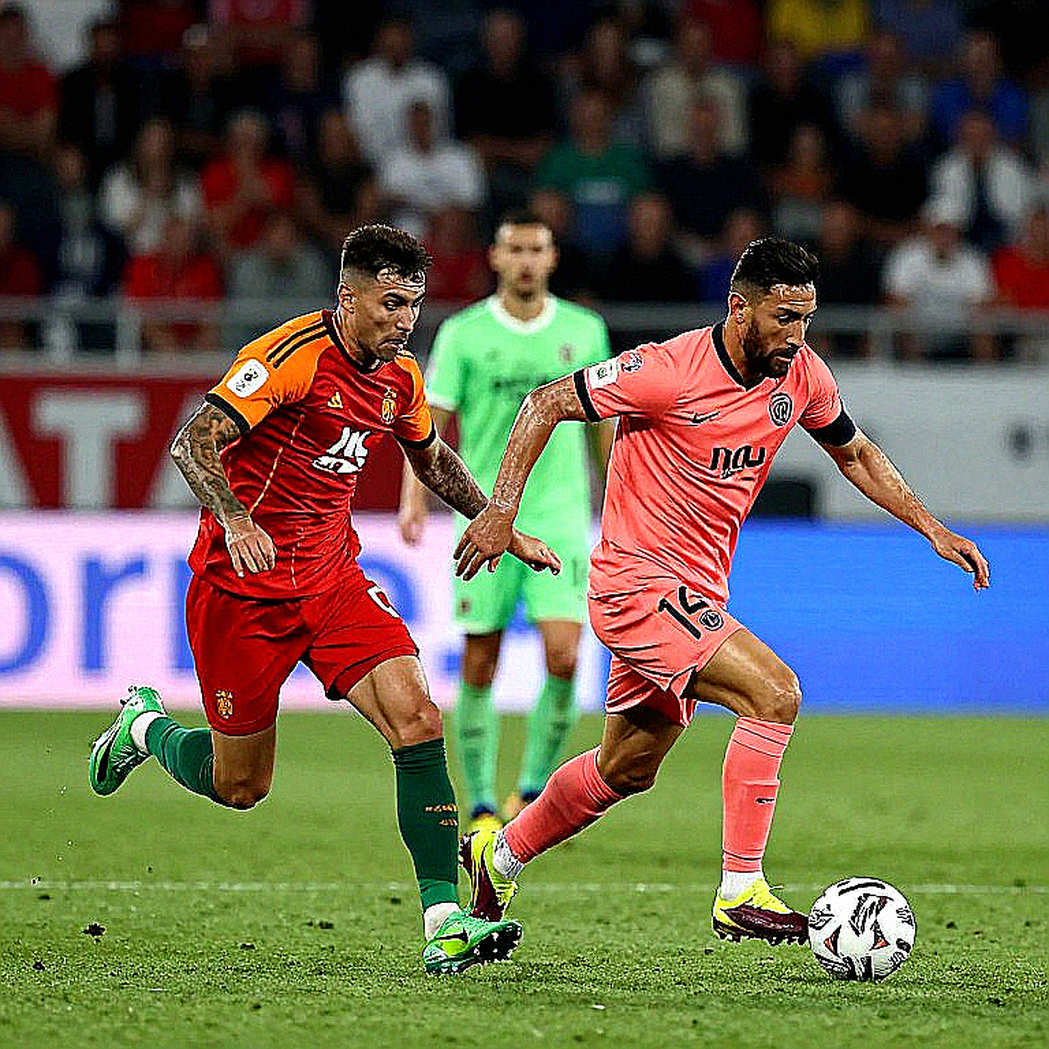
Possibility one: the transition concessions were a deliberate price chosen by the coaching staff, and the staff are right. At under-16 level, teaching players to build from the back matters more than winning a friendly tournament. Four goals conceded in a friendly may be cheap tuition for a skill that will follow these players throughout their careers. If that is the case, my diagnosis stands but my attitude changes: the issue stops being a mistake and becomes a matter of priority.
Possibility two: I have read far too much into a single match. A sample of one is weak. Three concessions with the same mechanism could simply be a bad day, not a structure. The China U16 match on 27 September 2026 will answer part of that, and by then I am ready to say I overstated the case.
Possibility three, and the one that unsettles me most: I am an Argentine living in Vietnam, and I may be applying an unsuitable yardstick to Southeast Asian youth football. Vietnamese football has its own path, developing under its own conditions, and models imported from Europe do not always convert. I have to ask myself this before every normative judgement: whose frame of reference am I using? If the answer is that of a 59-year-old foreign journalist, then that is the moment to lower my voice and listen more than speak.
But there is one thing I will not withdraw. A team that chooses proactive football must coach defensive transition with the same seriousness. That is a technical condition of the model, not a personal opinion. Teach players only to push forward without teaching them how to cover behind, and the team will keep paying the tax at every tournament, at every age group, in every cycle.
What I expect from the two remaining fixtures
At 59, I am not wiser than anyone, only less afraid of headlines. So I will close this piece with verifiable predictions rather than a soothing summary.

Prediction one: if Vietnam U16 keep playing proactively against China U16 on 27 September 2026, and concede again from a loss of possession in central midfield, then the three-goal pattern against Australia U16 will be confirmed at structural level, no longer a one-day accident.
Prediction two: if Trung Anh remains involved in every Vietnam U16 goal across the next two matches, the coaching staff will face a personnel problem considerably more serious than the 2-4 scoreline.
Prediction three: the result against Kyrgyzstan U16 on 30 September 2026 will reveal where this cohort stands regionally, because it is the only fixture in which the physical gap is no longer the largest variable.
Before closing, I want to return to the line I wrote after Kazan, because it still holds on an under-16 pitch in China eight years later: the philosophy did not die in Kazan, it died long before — we simply did not see it. And I write long articles to say something short: football is never what you think it is.
An under-16 team losing 2-4 in a friendly tournament is not a catastrophe. But three goals conceded at the same address in one match is data. What matters is what the coaching staff do with that data before it hardens into habit, because in youth football, habit is the one thing no single training session can fix.