
Vietnam vs Thailand: The Provocation Trap and a Single-Path Game Plan
**Câu trả lời cốt lõi**: Trận Việt Nam – Thái Lan được quyết định ở tuyến giữa và ở khả năng giữ kỷ luật cảm xúc trước các pha khiêu khích. Việt Nam phụ thuộc vào Nguyễn Hoàng Đức trong chuyển đổi trạng thái, trong khi Thái Lan tăng cường tuyến giữa bằng Chanathip Songkrasin và Supachok Sarachat. Kế hoạch khai thác cặp trung vệ lớn tuổi của Thái Lan chỉ khả thi nếu Việt Nam thắng được tuyến giữa trước. **Dữ kiện chính**: - Cựu Phó Chủ tịch AFF/VFF Dương Vũ Lâm cảnh báo nguy cơ bẫy khiêu khích và tầm quan trọng của tuyến giữa (Dân trí). - Thái Lan có cặp trung vệ Manuel Tom Bihr (33 tuổi) và Nattapong Sayriya (34 tuổi), chậm và che chắn chéo kém. - Nguyễn Xuân Son được mô tả đã nặng hơn, chậm hơn, cảm giác bóng giảm, cùng chấn thương. - Nguyễn Thành Chung, trung vệ được đánh giá hay nhất, vắng mặt; nhiều trụ cột Việt Nam chấn thương. - Nguồn tin không thống nhất về tên giải đấu (ASEAN Cup 2024 / ASEAN 2026), dữ liệu cần kiểm chứng. **Nguồn**: Dân trí, phỏng vấn cựu Phó Chủ tịch AFF/VFF Dương Vũ Lâm | Cross-checked: VuaBong.vn **Hỏi đáp liên quan**: Hỏi: Vì sao kế hoạch tấn công của Việt Nam được gọi là kế hoạch một đường bóng? Đáp: Vì việc khai thác cặp trung vệ Thái Lan chỉ khả thi sau khi kiểm soát được tuyến giữa, và khả năng chuyển đổi gần như dồn vào Nguyễn Hoàng Đức. Hỏi: Rủi ro lớn nhất của Việt Nam trong trận này là gì? Đáp: Rủi ro kỷ luật — phản ứng trước các pha khiêu khích có thể dẫn tới thẻ đỏ, xóa sổ toàn bộ tính toán chiến thuật. Hỏi: Vì sao đánh giá dựa trên nguồn này cần thận trọng? Đáp: Vì đây là ý kiến chuyên gia một nguồn, không có dữ liệu xG, PPDA hay kiểm soát bóng kèm theo, và tên giải đấu trong nguồn không thống nhất.
Vietnam vs Thailand: The Provocation Trap and a Single-Path Game Plan
In the final twenty minutes against the Philippines, Vietnam's midfield allowed the opposition to push the ball forward almost unchallenged. I noted three things in my book: loss of midfield control, space behind the midfield line, and turnovers in the middle third. Those are the kind of signals that a match against Thailand multiplies several times over.
When the 222 million euro deal was signed in 2026, I understood that markets shape how people read football. Years later, working from Osaka on Southeast Asian football, I noticed the same principle at a different scale: a few numbers and a few names are enough to frame an entire encounter. Vietnam versus Thailand is a case in point.
The source and its limits
The most notable pre-match voice came from former AFF/VFF Vice President Duong Vu Lam, speaking to Dan Tri. He focused on two points: the midfield battle, and the risk of falling into the opponent's provocation trap. That is expert opinion, not verified data. An insider's view carries weight, but that weight cannot replace numbers.
The tournament naming in the source is inconsistent, mixing ASEAN Cup 2026, ASEAN 2026, and FIFA ASEAN Cup 2026 references alongside a two-legged final detail, even though tonight's match is described as a group decider. I flag this as data to be verified. When the competition framework is unclear, every judgment about the match's true stakes must be downgraded one level.
What the source actually provides is a personnel and psychological picture, not a data picture. There is no xG, no xA, no PPDA, no possession figure. So I separate what can be inferred from football logic from what is merely subjective opinion. This mirrors how I read a transfer deal: inside information only has value when it aligns with financial structure and squad logic.
On Vietnam's side, the picture is heavy: multiple injured key players, a visibly declining Xuan Son, and the absence of Thanh Chung. On Thailand's side, the highlight is the return of Chanathip Songkrasin and Supachok Sarachat. The center-back pair of Manuel Tom Bihr (33) and Nattapong Sayriya (34) is assessed as slow and poor at covering diagonal space.
The match is defined by midfield
The principle that controlling midfield means controlling the match is correct, but it only has analytical value when tied to specific data. The source states the principle without providing numbers. I do not dispute the principle; I dispute using it as a conclusion rather than a hypothesis.
The structural issue is dependency. According to the source, Vietnam's transition ability is concentrated almost entirely in Nguyen Hoang Duc. Without him, the team plays without variation, does not control possession, and lets opponents push up. That is a classic single-point dependency. Depending on one midfielder for press escapes and transitions means the whole system has only one passing lane.
Thailand's addition of Chanathip and Supachok restructures the midfield toward technical craft. They do not run the most or duel the most, but they create small chaos: a change of direction, a line-breaking pass, a moment of held possession. That forces opposing midfielders into constant decisions, and every wrong decision is space.
The source calls them cunning and stresses that Vietnam's less experienced players may be drawn into provocation. This is the most important tactical detail in the interview. Thailand arrives not just to play, but to manage the opponent's emotions, manufacturing set pieces and card advantages.

Thailand's center-backs and the gating condition
The Bihr-Sayriya pair is old, slower, and weak at diagonal cover. For a fast striker like Dinh Bac, that is an opening. But to reach those center-backs, Vietnam must first play through Thailand's midfield. That transforms a weakness into a conditional weakness. If Vietnam loses midfield, the slow center-backs are shielded by the shape itself.
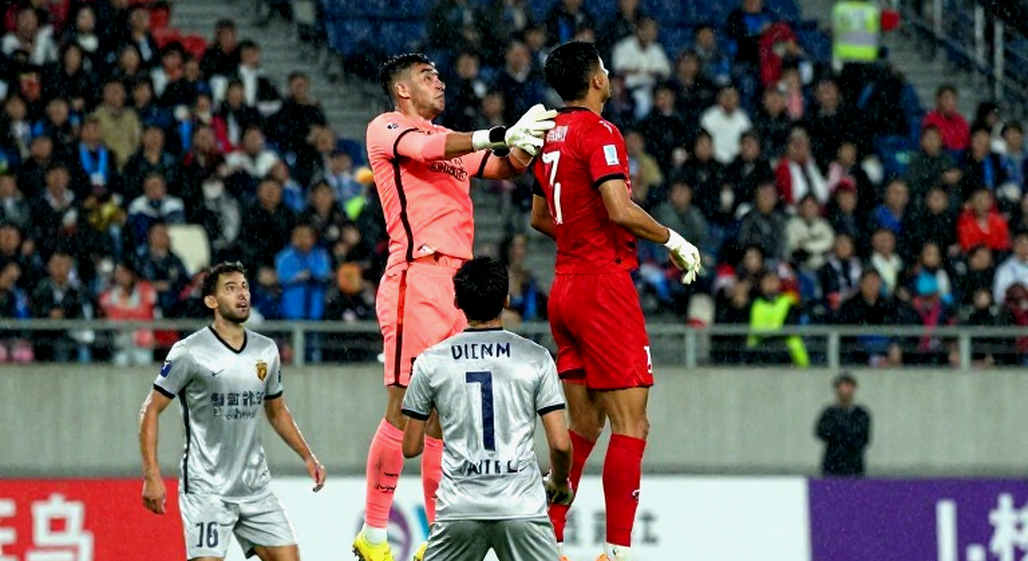
This is a single-path plan, a concentration risk. The escape route would be direct long balls into the channel behind the center-backs, bypassing midfield. But that only works if the target striker holds the ball, and the source makes clear Xuan Son is heavier, slower, and declining. Tai Loc and Williams Minh Hoang have not demonstrated the ability to replace that function.
Xuan Son's value is not goals
His value is reframed as occupying hot spots, attracting defenders, and disrupting the defensive system. That contribution does not appear on the scoreboard but exists in attacking structure. One striker drawing two center-backs creates space for others. But this function depends on physical condition, and when fitness declines, non-scoring contributions decline faster than goals.
Vietnam leaning on naturalized and overseas Vietnamese attackers signals a pipeline gap in domestically produced spearhead strikers. That is a long-term strategic theme worth tracking.
Psychology: Thailand's double-edged bet
Thailand enters with revenge motivation after repeated recent losses to Vietnam, including a 2-0 defeat described as a final first leg. High motivation creates intensity but also over-commitment, which correlates with more fouls and positional indiscipline. If Vietnam stays composed, Thai emotional commitment becomes a source of set pieces and cards. If Vietnam gets dragged in, the advantage flips instantly.
The source notes Hoang Duc must constantly remind newcomers about provocation discipline. That means on-field command rests with one player rather than in the team structure. Command and transition both depend on the same person.
The Thanh Chung gap
Losing Thanh Chung, described as the best and smartest center-back, may be the most underrated blow. A defensive organizer adjusts the whole line and, most importantly, talks. Without that voice, gaps between center-backs widen and diagonal balls behind midfield become far more dangerous.
Contrarian angle: the favored side is the weaker side by underlying data
Recent head-to-head leans Vietnam. Thailand has lost repeatedly. The crowd will frame Vietnam as favorites. But setting head-to-head against current state flips the picture: a thin squad, poor opening form, a declining spearhead, an absent defensive organizer, and a key midfielder needing to regain form. That is a team in an uncertain state, not a favorite.
The gap between expectation and fundamentals is where psychological risk lives. If Vietnam wins, the story will be composure under provocation. If Vietnam loses, the story will be injuries and referees. Both explanations are pre-built.

A second contrarian point: the source may be underrating Thailand. Adding Chanathip and Supachok makes their midfield stronger than in the previous tournament. When one side is described as strengthening and the other as weakening, yet public expectation still favors the weakening side, that signals mispricing.
A third: the largest risk is discipline, not tactics. A retaliation red card can erase every tactical calculation in one instant. Modern football is not won on the pitch; it is prepared in the dressing room and in training for pressure tolerance.
Three conditions that would break my conclusion
First, if Hoang Duc reaches peak form and controls tempo, the single-point dependency concern fades sharply. Second, if Thailand's center-backs are stretched early by a goal or a card, the pace channel opens regardless of midfield. Third, if the referee sets a high tolerance for contact and does not whistle early, Thailand's provocation tactics lose value.
I once wrote that the pandemic did not destroy football, it only wiped out poor managers. The same holds for national team fixtures: pressure does not create ability, it only exposes who prepared and who did not.
Signals to track after kickoff
Five signals matter: Hoang Duc's starting status and early touches; Vietnam's yellow count in the first thirty minutes; whether midfield passing goes forward or sideways; the height and width of Thailand's defensive line; and how the referee handles the first physical exchanges.
Conclusion
What matters here is not predicting a winner, but reading the structure of a team operating with too few anchor points. If Vietnam solves the midfield problem without Hoang Duc at his peak, that signal matters far more than three points. If not, this match becomes a lesson about how a single-path plan can always be blocked by one correct decision from the opponent.