
Domestic Football
V-League 2026-2027: When referees and VAR forget the red line
VFF, VPF và Ban tổ chức V-League yêu cầu Ban trọng tài VFF ngăn chặn bạo lực sân cỏ sau loạt pha bóng thô bạo đầu mùa 2026-2027. Cựu Trưởng ban trọng tài VFF Dương Vũ Lâm cho rằng trọng tài Lê Vũ Linh đã bỏ sót thẻ đỏ với Huỳnh Tấn Sinh tại trận Đồng Nai – CAHN ngày 20/9/2026. Sự kiện chính: - Lê Văn Sơn đánh chỏ vào Nguyễn Đình Bắc ở trận Đồng Nai – CAHN ngày 20/9/2026. - Huỳnh Tấn Sinh đá nguội Nguyễn Đình Bắc hai lần nhưng chỉ nhận thẻ vàng. - Đoàn Văn Hậu đá gãy chân Doãn Ngọc Tân ở vòng 2 V-League 2026-2027. - Ezeqiuel Santos Da Silva đạp vào bụng Võ Hữu Việt Hoàng ở vòng 2. - Dương Vũ Lâm đề nghị treo còi trọng tài Lê Vũ Linh nếu phạt nguội Tấn Sinh. Nguồn: Dân trí, trao đổi sau trận đấu ngày 20/9/2026 | Cross-checked: VuaBong.vn Hỏi đáp liên quan: - Hỏi: Trọng tài Lê Vũ Linh sai ở đâu? Đáp: Ông bỏ sót thẻ đỏ khi Huỳnh Tấn Sinh bỏ bóng đá người Nguyễn Đình Bắc hai lần. - Hỏi: Làm sao biết trọng tài bị kỷ luật? Đáp: Nếu trọng tài vắng tên ở các vòng liền kề, khả năng cao họ bị treo còi. - Hỏi: Trách nhiệm tổ VAR thế nào? Đáp: Nếu tổ VAR không tư vấn thẻ đỏ, tổ VAR cũng phải bị xử lý.
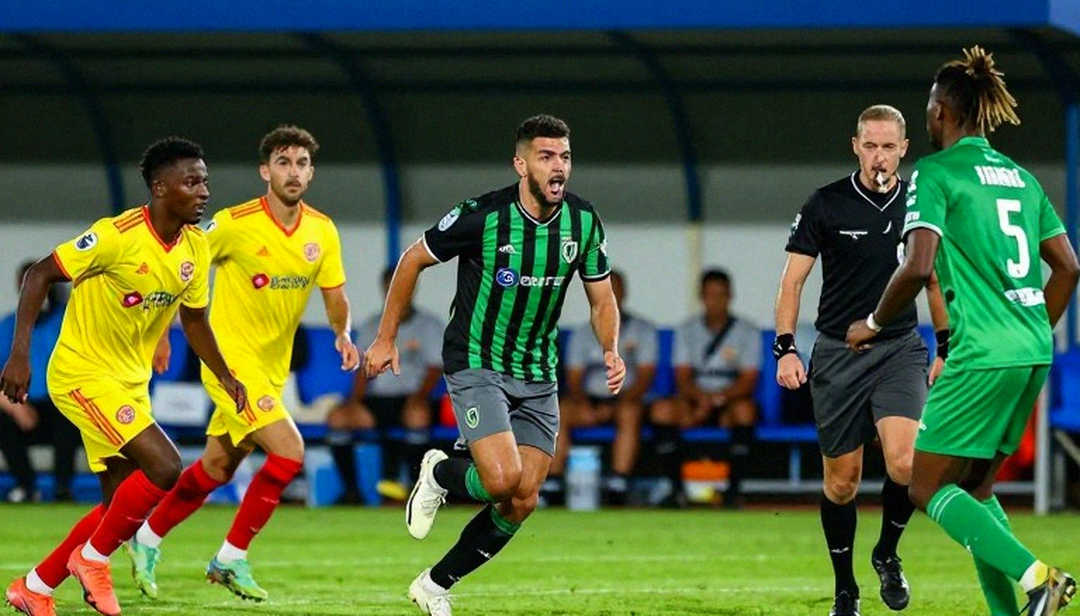
The sound of the ball hitting the ground is the final sound of truth. On Đồng Nai’s home ground, in the match against Công An Hà Nội (CAHN) on September 20, 2026, that truth was not in the scoreline or in the beautiful attacking patterns. It was in the elbow thrown by defender Lê Văn Sơn at striker Nguyễn Đình Bắc. The incident happened in a tight space, but it was enough to open a major debate about V-League discipline.
Đồng Nai’s central defender Huỳnh Tấn Sinh then repeatedly came from behind and kicked Đình Bắc. The first challenge could be excused as a poorly controlled attempt to stop the attacker. The second one, with the ball already beyond both players, had the nature of a deliberate kick. Referee Lê Vũ Linh only showed a yellow card. He did not send off Tấn Sinh even though the player had twice aimed at an opponent’s legs.
These images did not appear alone. A few days earlier, in round two of V-League 2026-2027, CAHN defender Đoàn Văn Hậu broke the leg of Thể Công Viettel midfielder Doãn Ngọc Tân. In the same round, Nam Định foreign player Ezeqiuel Santos Da Silva kicked Võ Hữu Việt Hoàng of SHB Đà Nẵng in the stomach. Within the first three rounds, violence had become a hotter topic than the title race.
Fearing the damage to V-League’s image, representatives of VFF, VPF and the tournament organisers met directly with VFF’s Referee Board. The demand was short: referees must apply the law properly, maintain discipline and stop rough play.
The phrase “apply the law properly” sounds general, but in this context it has a precise meaning: no missed fouls, no missed cards. The Đồng Nai – CAHN match was the first test of that principle. Referee Lê Vũ Linh did not pass the test.
Former VFF vice president in charge of professional football and former head of VFF’s Referee Board Dương Vũ Lâm told Dân trí reporters after the match: “Referee Lê Vũ Linh missed a card related to this situation. Huỳnh Tấn Sinh committed an obvious foul while ignoring the ball but did not receive a red card.”
Mr. Dương Vũ Lâm also proposed a clear approach: if the federation gives Tấn Sinh a suspended ban, it should suspend referee Lê Vũ Linh for the same amount of time. The man holding the whistle cannot remain outside the chain of responsibility when he allowed the ball to cross the line.
He also raised the responsibility of the VAR team, consisting of Võ Hoài Thương and Nguyễn Thành Sơn. If the VAR team advised the referee to show a red card and was overruled, it fulfilled its duty. If the VAR team stayed silent, it must also be punished. That logic is sound, but it needs to be clarified through official records.
Normally, disciplinary sanctions against referees are not announced publicly. Mr. Dương Vũ Lâm revealed one way to know: follow the referee appointments in the next rounds. If the referees are absent in the rounds immediately after the incident, they are likely being disciplined.
From a professional perspective, kicking a player while ignoring the ball cannot be treated as a tactical foul. It is violent conduct. Under football law, using excessive force against an opponent must be punished with a red card. If the referee does not see it, VAR must intervene. If both miss it, the system’s error will return in later rounds.
I often tell my colleagues that some goals are not in the tactics; they are in the air. Violence is the same. It does not start with a kick; it starts with an atmosphere that allows kicks to pass without consequences. When a player deliberately kicks an opponent twice and stays on the pitch, the message to other teams is clear: the red line is being erased.
The sad part is that VAR, technology created to protect fairness, now stands before an unanswered question. If the VAR team in Đồng Nai – CAHN saw Tấn Sinh’s kick and advised a red card, why was the final decision a yellow card? If the VAR team did not see it or did not speak up, responsibility must be assigned. A system meant to review errors cannot become a place where errors are hidden.
That is why the demand of VFF and VPF to the Referee Board is not a slogan. The board needs to review every incident, compare video evidence, and identify which referee erred and which VAR stood still, then impose internal sanctions. Fans may not know the details, but the result will be reflected in the quality of officiating in the coming rounds.
The issue is no longer Huỳnh Tấn Sinh or Lê Văn Sơn. The issue is whether the disciplinary system has enough deterrent power. A league that wants respect must start by handling the worst incidents fairly. If only players are banned while referees are assigned as if nothing happened, the next round will bring even worse situations.
Fans do not demand a league without mistakes. They demand that serious mistakes are not repeated. In Đồng Nai – CAHN, the fault did not only lie with the home players. It lay with the fact that a match with VAR, a referee and assistant referees still ended with only a yellow card for a violent kick.
Vietnamese football has overcome many difficult phases through discipline and patience. V-League 2026-2027 does not lack talent or emotional matches. But talent is remembered only when the match is fair. A season with three black marks after only three rounds will be remembered more for what went wrong than for what went right.
We do not watch football with our eyes; we watch it with memory. The memory of this season is still being written. If VFF, VPF and VFF’s Referee Board act firmly, September 20, 2026 can become a warning marker. If not, it will become one of the days marking the return of violence.
Referee Lê Vũ Linh may not be named in official statements. But the list of appointments in the next rounds will say it. Football always finds a way to expose the final truth. And when the ball rolls next weekend, the sound of the ball hitting the ground will remain a reminder: discipline is not something to read in the law; it is something to enforce on the pitch.

Cầu thủ liên quan
Bài đề xuất
When Only Three Remain: The Talent-Excavation Problem in the 2026 V.League Transfer Window2026-09-21
Hanoi FC concede seven in two rounds: 40 minutes in the dressing room and the fracture between Kewell and his squad2026-09-13
Vietnam U23 vs Philippines U23: The Real Worry Is the Long Throw, Not the Attack2026-09-18
Vietnam U23 at Asian Games 2026: Squad Map, Fixture Density and Three Group C Matches2026-09-13
U23 Thailand vs U23 Hong Kong (China): Quarter-final Ticket in Sight, but Weaknesses Remain Unfixed2026-09-20
Vietnam U20 Asian Cup Qualifiers Exit: Apologies from Captain Quoc Khanh and Coach Yutaka Ikeuchi After 3-1 Loss to Iran2026-09-08
Empty football analysis report: unable to write article when source data is missing2026-09-08
Bài đề xuất
The Team Sheet at Binh Phuoc: Cong Phuong Benched and the Hole in Dong Nai's Back Line2026-09-21
Hanoi FC concede seven in two rounds: 40 minutes in the dressing room and the fracture between Kewell and his squad2026-09-13
Thanh Hoa's New Beginning: From 18 Men to High Ambitions - The Resurrection of a Club Once on the Brink2026-09-04
U23 Vietnam Before Asiad 2026: Four Days, Two Goalkeepers and an Unsigned Deal2026-09-11
V-League 2026 Youth Revolution: When the 'Talent Thirst' Becomes a Tactical Puzzle for Vietnamese Football2026-09-04
CAND FC and the Promotion Puzzle: When 'Heavy Investment' Doesn't Guarantee Victory2026-09-04
Japan Isn't a Lesson — It's an Arithmetic Test for Vietnam's Women2026-09-16